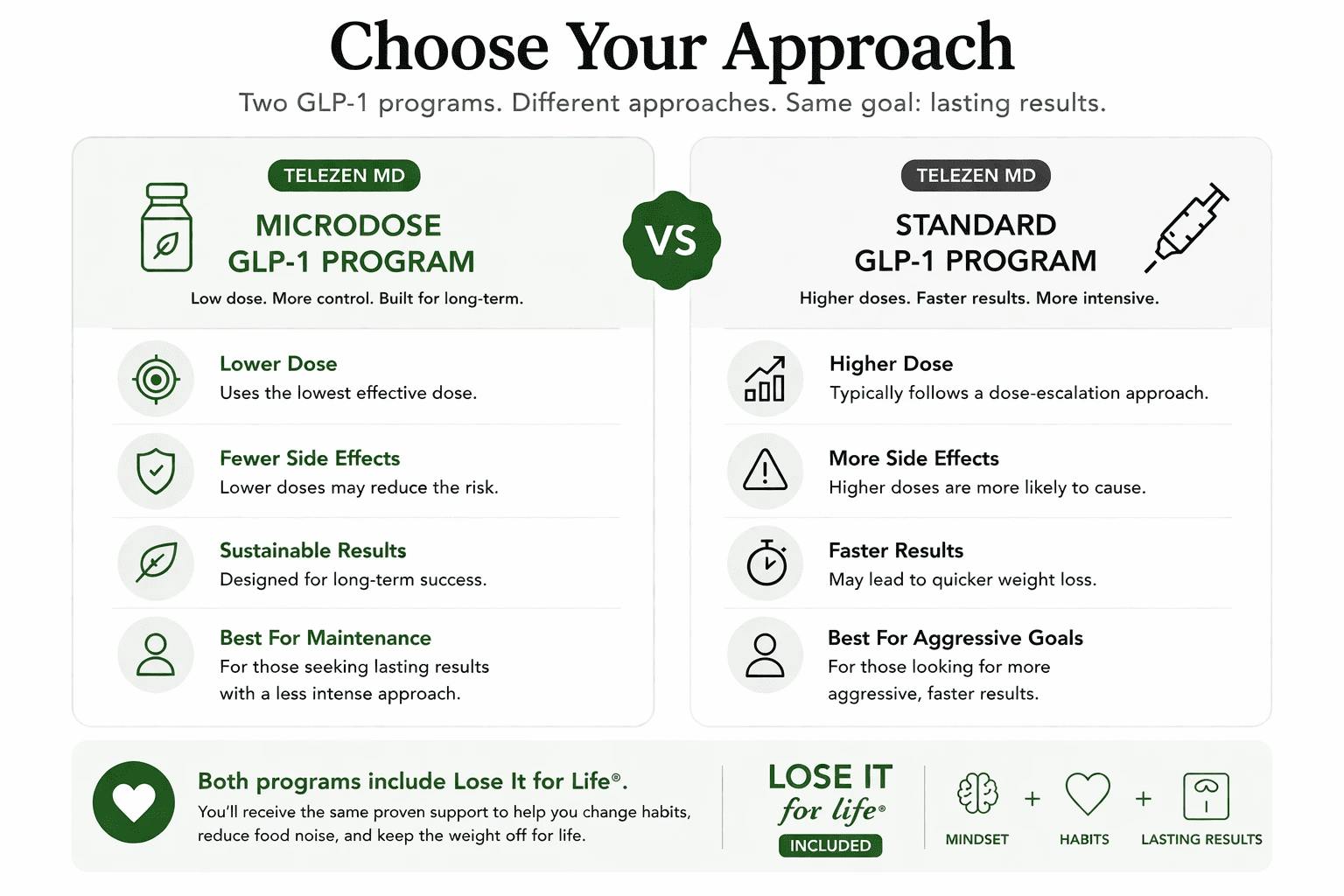
GLP-1 receptor agonists have been extensively studied for their role in appetite regulation, metabolic health, and weight management.
The studies below highlight the established mechanisms and clinical outcomes of GLP-1 therapy. While most clinical trials evaluate standard dosing protocols, these findings help inform more personalized approaches, including lower-dose strategies.
These references are provided for educational purposes only and do not represent guaranteed outcomes.
GLP-1 Physiology & Appetite Regulation
Research shows that GLP-1 plays a central role in regulating hunger, satiety, and energy balance.
1. GLP-1 Physiology and Central Regulation of Appetite
Nature Reviews Endocrinology
https://www.nature.com/articles/s41574-020-00426-2
2. The Role of GLP-1 in Energy Balance and Body Weight Regulation
Physiological Reviews
https://journals.physiology.org/doi/full/10.1152/physrev.00014.2018
Clinical Weight-Loss Outcomes with GLP-1 Receptor Agonists
Clinical trials demonstrate that GLP-1 therapies can support meaningful weight loss when used under medical supervision.
3. Once-Weekly Semaglutide in Adults with Overweight or Obesity
New England Journal of Medicine
https://www.nejm.org/doi/full/10.1056/NEJMoa2032183
4. Tirzepatide versus Semaglutide for Weight Loss
New England Journal of Medicine
https://www.nejm.org/doi/full/10.1056/NEJMoa2206038
5. Sustained Weight Loss with GLP-1 Receptor Agonist Therapy
The Lancet Diabetes & Endocrinology
https://www.thelancet.com/journals/landia/article/PIIS2213-8587(21)00124-0/fulltext
Metabolic Health, Insulin Sensitivity & Long-Term Outcomes
GLP-1 therapies have also been studied for their effects on blood sugar regulation and cardiometabolic health.
6. GLP-1 Receptor Agonists and Cardiometabolic Risk Reduction
Journal of the American Medical Association (JAMA)
https://jamanetwork.com/journals/jama/fullarticle/2789270
7. Mechanisms of GLP-1 in Glucose Regulation and Insulin Sensitivity
Endocrine Reviews
https://academic.oup.com/edrv/article/39/4/493/5038295
Personalized & Lower-Dose Approaches
While most clinical research focuses on standardized dosing protocols, clinical practice often adapts treatment based on individual response, tolerance, and goals.
Lower-dose approaches, including microdosing, are used by some providers to:
- Improve tolerability
- Reduce side effects
- Support long-term adherence
Treatment decisions are always individualized and determined by a licensed medical provider.
Ongoing Research
GLP-1 therapies continue to be actively studied across a range of metabolic and clinical applications.
8. Clinical Trials Investigating GLP-1 Receptor Agonists
U.S. National Library of Medicine – ClinicalTrials.gov
https://clinicaltrials.gov/search?cond=&term=GLP-1+receptor+agonist